As our wonderful Indian Summer runs out, and the storms of the season move in, now is a really good time to check in with your health.
Now is a time where you can still forage the nurturing Hedgerow berries (Haws, rosehips and sloes are still to be found) these will support your heart health (Haws) and immunity (sloes and rosehips) and so much more.
As the light evenings fade into cosy evenings, now is a good time to make sure you are catching up on enough sleep, burning the candle at both ends is great, but sleep is essential to the immune system, so if you are tired, make sure you fit your sleep hours in. The darker days are a time of hibernation, and whilst we are not bears, our bodies still work with the seasons.
If you are not great at sleeping, consider plenty of rest time, time without the blue light of computer screens, and time with something gentle and soothing, perhaps reading a good book with relaxing music, or a gentle craft that can easily be picked up or put down. Epsom salt baths are really soothing at bed time, perhaps add a few drops of your favourite relaxing essential oil, or add a few rose petals to feel luxurious.
With the longer nights, there is more time to crave snacks, this feels great when you are eating it, but is it really helping you? Sugar weakens the immune system, so excessive sweet will lower your resistance and may make you feel more sluggish in the long run. So avoid high sugar foods and opt for fruit or slow release whole grains. Skip the fizzy drinks, they too remove nutrients from the body that you really need for your immune system, use warming herbal teas, or try a turmeric latte or chai.
Make sure you are getting enough protein in your diet. This will help your body repair and help balance your blood sugars. Protein rich foods include meats, dairy, fish, nuts and seeds and also pulses (eaten in balance with whole grains for example). If you are prone to mucous health problems (think asthma etc) then dairy may not be such a good choice, do get in touch if you are not sure what is right for you).
Warming spices in your foods will also help you to keep well. Try ginger or chilli in your soups, or a little ginger and / or cinnamon in your porridge to keep you warm all day.
Sandwiches may not be enough to cut the chilly days that are on their way, so why not consider a warming simple soup in a flask along with a roll or a gluten free crisp bread? Here is a recipe to help you with ideas.
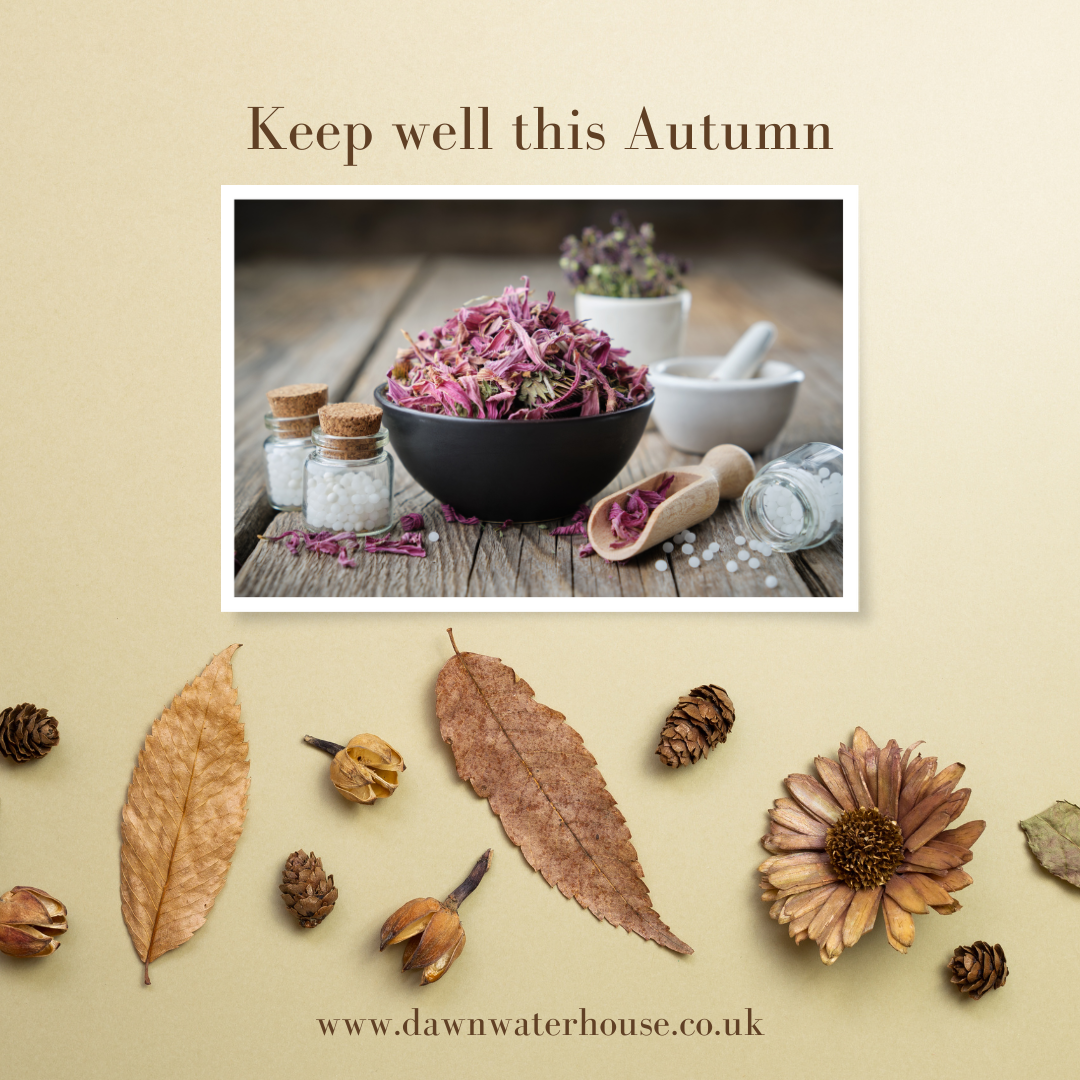
If you have a cold, consider using echinachea tincture and/ or elderberry syrup to support your immune system along with lemon, ginger and honey in hot water.
With rainy weather, you can not help but get drenched at some point. If this happens make sure you dry out and warm up quick. With football keen children, the rain may not be noticed when out playing, the night may follow with sore achy legs, restless nights and colds. Homeopathic Rhus-tox *is a great remedy to consider for this. If you or your little one has become drenched or chilled, wrap up warm, after removing wet clothing and have a warm soak in the bath (if possible).
If a cold or fever comes on suddenly, you may want to consider using Homeopathic Aconite, if you have a cold that is dragging on, or post viral fatigue, you may want to consider homeopathic Gelsemium. This is also a great remedy for a cold where there is constant sneezing.
If you need support, or have questions about a personalised remedy get in touch.
Now is a time where you can still forage the nurturing Hedgerow berries (Haws, rosehips and sloes are still to be found) these will support your heart health (Haws) and immunity (sloes and rosehips) and so much more.
As the light evenings fade into cosy evenings, now is a good time to make sure you are catching up on enough sleep, burning the candle at both ends is great, but sleep is essential to the immune system, so if you are tired, make sure you fit your sleep hours in. The darker days are a time of hibernation, and whilst we are not bears, our bodies still work with the seasons.
If you are not great at sleeping, consider plenty of rest time, time without the blue light of computer screens, and time with something gentle and soothing, perhaps reading a good book with relaxing music, or a gentle craft that can easily be picked up or put down. Epsom salt baths are really soothing at bed time, perhaps add a few drops of your favourite relaxing essential oil, or add a few rose petals to feel luxurious.
With the longer nights, there is more time to crave snacks, this feels great when you are eating it, but is it really helping you? Sugar weakens the immune system, so excessive sweet will lower your resistance and may make you feel more sluggish in the long run. So avoid high sugar foods and opt for fruit or slow release whole grains. Skip the fizzy drinks, they too remove nutrients from the body that you really need for your immune system, use warming herbal teas, or try a turmeric latte or chai.
Make sure you are getting enough protein in your diet. This will help your body repair and help balance your blood sugars. Protein rich foods include meats, dairy, fish, nuts and seeds and also pulses (eaten in balance with whole grains for example). If you are prone to mucous health problems (think asthma etc) then dairy may not be such a good choice, do get in touch if you are not sure what is right for you).
Warming spices in your foods will also help you to keep well. Try ginger or chilli in your soups, or a little ginger and / or cinnamon in your porridge to keep you warm all day.
Sandwiches may not be enough to cut the chilly days that are on their way, so why not consider a warming simple soup in a flask along with a roll or a gluten free crisp bread? Here is a recipe to help you with ideas.
If you have a cold, consider using echinachea tincture and/ or elderberry syrup to support your immune system along with lemon, ginger and honey in hot water.
With rainy weather, you can not help but get drenched at some point. If this happens make sure you dry out and warm up quick. With football keen children, the rain may not be noticed when out playing, the night may follow with sore achy legs, restless nights and colds. Homeopathic Rhus-tox *is a great remedy to consider for this. If you or your little one has become drenched or chilled, wrap up warm, after removing wet clothing and have a warm soak in the bath (if possible).
If a cold or fever comes on suddenly, you may want to consider using Homeopathic Aconite, if you have a cold that is dragging on, or post viral fatigue, you may want to consider homeopathic Gelsemium. This is also a great remedy for a cold where there is constant sneezing.
If you need support, or have questions about a personalised remedy get in touch.
The advice in this blog post does not replace the advice you receive from your medical practitioner.





 RSS Feed